
Ever thought AI was a brand-new invention? Think again! Artificial intelligence has been around since the 1950s, but only recently has it managed to steal the spotlight. Let's take a journey through time together and discover how AI has evolved—with the occasional wink, of course.
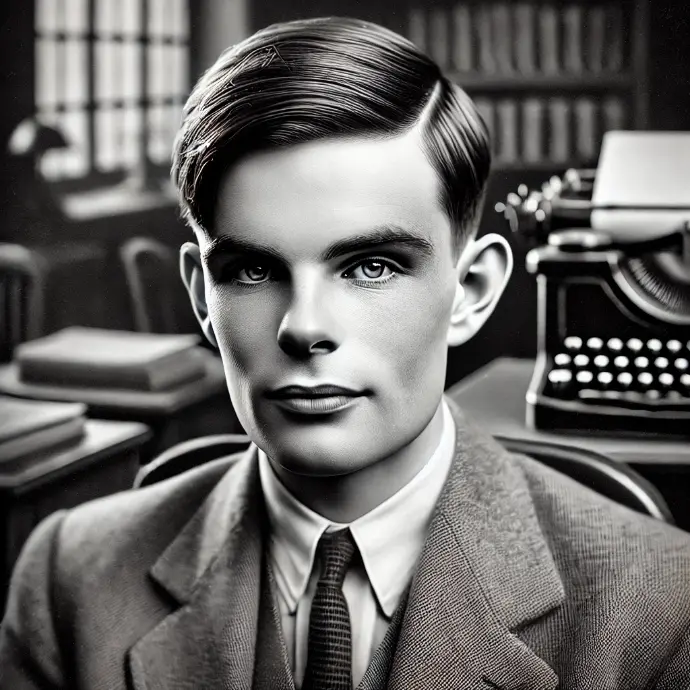
GRANDFATHER OF AI
Alan Turing
When we talk about AI, we can't overlook Alan Turing. This British mathematician and computer scientist played a crucial role in the development of artificial intelligence. During World War II, he helped crack the Enigma code, essentially solving the ultimate escape room before it was cool.
In the 1950s, Turing introduced the famous Turing Test. The idea was simple: if a machine can mimic human behaviour in a conversation and you can't tell you're talking to a machine, then the AI has passed. Sounds like that one time you called customer service thinking you were speaking to a person, but it was actually a robot on the line.
ELIZA: The First Digital Therapist
In 1966, ELIZA made her debut — one of the first chatbots, developed by Joseph Weizenbaum. She simulated a Rogerian psychotherapist by rephrasing your questions as answers. Imagine: you share your deepest secrets with a computer and get the response: "And how does that make you feel?" Not exactly Dr. Phil, but it was a start.
Although ELIZA managed to fool some users, she didn't pass the Turing Test. But hey, we've all pretended to understand someone by simply nodding and saying "uh-huh," right?
Eugene Goostman: The Teenager Who Wasn't a Teenager
Fast forward to June 2014. A chatbot named Eugene Goostman, posing as a 13-year-old Ukrainian boy, claimed to have passed the Turing Test. He managed to fool 33% of the human judges—just above the 30% threshold suggested by Turing. Critics were sceptical, however. It's a lot easier to use language barriers and teenage slang as an excuse for strange answers. Well played, Eugene.
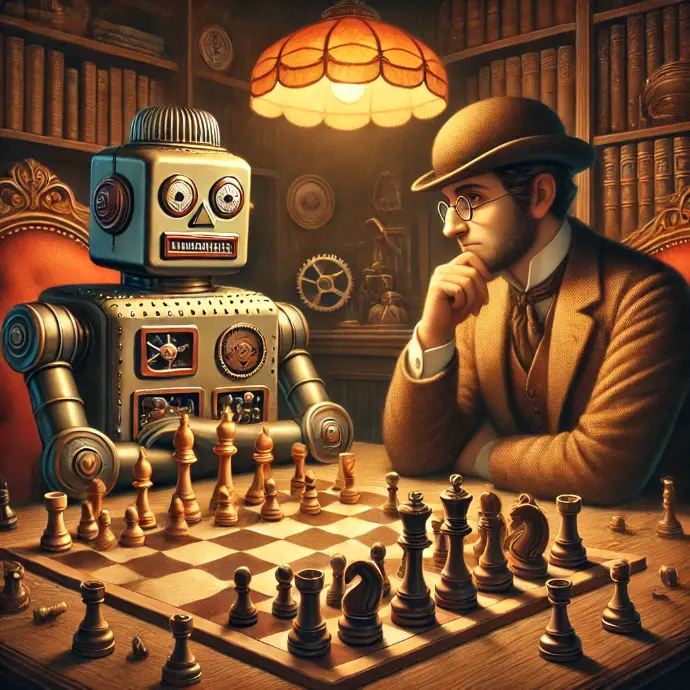
CHESS MATCH OF THE CENTURY
Deep Blue vs. Garry Kasparov
And then there's Deep Blue, the chess computer developed by IBM. In 1996, it took on Garry Kasparov, the reigning world chess champion. Kasparov won 4–2, but Deep Blue managed to win one game—the first time a computer had defeated a reigning world champion in a classical game. In 1997 came the rematch, and this time Deep Blue won 3.5–2.5.
With the ability to evaluate 200 million chess positions per second, Deep Blue was a true powerhouse. It was like watching your grandma win a round of Call of Duty—you just don't expect it.
ChatGPT: The New Game Changer
In November 2022, OpenAI launched ChatGPT. And that was, to put it mildly, a revelation. Finally, an AI that could not only answer logically but also had a sense of humour (well, most of the time). Companies jumped on it like kids on a trampoline, and are now integrating it into everything from customer service to automation. Even in education, ChatGPT is popping up as a handy assistant. Who would have thought you'd get help with your homework from a computer that can also crack jokes?
Don't Miss the Boat!
So many people think AI is something new, but it's actually been around for nearly a century. The difference is that development has seen a massive growth spurt in recent years—think of AI on steroids, but legal.
It's high time to embrace AI and jump on that moving train. Otherwise, you'll miss the boat, and believe me, this boat has free wifi and serves digital cocktails. 😉
Conclusion
Artificial intelligence isn't as new as it seems. It has a rich history full of fascinating characters and milestones. From Alan Turing's foundational principles to the advanced capabilities of ChatGPT, AI has come a long way. So what are you waiting for? Jump aboard and discover what AI can do for you. But watch out—before you know it, your fridge will be beating you at chess!